How to predict by coordinate

Input the genomic coordinates of your region of interest, using hg38 as the reference genome. This input is the most flexible, and is unconstrained by sequencing coverage or any annotation. Be sure to double-check that the output sequence matches your expected region, and check that the output coverage of A/C bases is above the recommended 70%, which is reflective of DMS-modifiable bases meeting all coverage and quality filters.

For most users, only one set of coordinates will be used to define their region of interest. However, two sets of coordinates may be needed when joining two separate regions together, such as when crossing a splice junction.

When analyzing a region within a larger transcript, it is generally recommended to test “buffer” regions, where the region of interest should be extended by 20-50 nt on each end in order to reduce the likelihood of structures being arbitrarily interrupted by the region borders.

Due to computational and server constraints, users will be limited to a maximum input length of 500 nucleotides and a maximum output of 5 predicted structures, though some regions may yield fewer than that. If this does not suit your needs, consider downloading and running the data and code locally (see Download ).
Predict by Gene


Advanced Options
Chromosomal Coordinates (max 500bp)
Coords 1  
Additional Coordinates
Coords 2 Optional
Coords 3 Optional
Coords 4 Optional


SUGP2
ENST00000337018 (-) ENSG00000064607 (-)

Visualize entire gene
100
150
300
500
+
-
Predict

  Region Local Coords Chrom Coords Length R N Gini Action
1
5'UTR,CDS 126-204 19031002-19031080 79 0.3216 50 0.29
2
CDS 208-306 19026176-19026226 / 19030951-19030998 99 0.5727 50 0.30
3
CDS 307-405 19026077-19026175 99 0.7973 50 0.41
4
CDS 407-506 19025976-19026075 100 0.6397 50 0.28
5
CDS 507-616 19025866-19025975 110 0.7304 50 0.38
6
CDS 619-757 19025725-19025863 139 0.5471 50 0.35
7
CDS 758-862 19025620-19025724 105 0.6738 50 0.31
8
CDS 863-940 19025542-19025619 78 0.7338 50 0.33
9
CDS 941-1016 19025466-19025541 76 0.5669 50 0.41
10
CDS 1017-1124 19025358-19025465 108 0.4895 50 0.28
11
CDS 1126-1210 19025272-19025356 85 0.3917 50 0.28
12
CDS 1211-1304 19025178-19025271 94 0.6019 50 0.36
13
CDS 1306-1404 19025078-19025176 99 0.3281 50 0.29
14
CDS 1405-1503 19024979-19025077 99 0.4567 50 0.28
15
CDS 1504-1592 19024890-19024978 89 0.7322 50 0.38
16
CDS 1597-1691 19024791-19024885 95 0.5606 50 0.38
17
CDS 1693-1785 19024697-19024789 93 0.0702 50 0.31
18
CDS 1786-1877 19019216-19019229 / 19024619-19024696 92 0.5838 50 0.38
19
CDS 1879-1967 19019126-19019214 89 0.4209 50 0.30
20
CDS 1969-2077 19010250-19010342 / 19019109-19019124 109 0.4081 50 0.26
21
CDS 2078-2166 19010161-19010249 89 0.5319 50 0.36
22
CDS 2167-2267 19010060-19010160 101 0.4481 50 0.40
23
CDS 2268-2363 19009964-19010059 96 0.4868 50 0.39
24
CDS 2364-2442 19009885-19009963 79 0.4227 50 0.34
25
CDS 2443-2540 19008361-19008428 / 19009855-19009884 98 0.2290 50 0.30
26
CDS 2542-2633 19004598-19004646 / 19008317-19008359 92 0.4142 50 0.36
27
CDS 2641-2735 19004496-19004590 95 0.9544 50 0.42
28
CDS 2736-2851 19004380-19004495 116 0.3952 50 0.37
29
CDS 2852-2948 19004283-19004379 97 0.6371 50 0.45
30
CDS 2953-3048 19004183-19004278 96 0.5530 50 0.33
31
CDS 3050-3131 18995275-18995280 / 19001613-19001674 / 19004168-19004181 82 0.5747 50 0.31
32
CDS 3132-3231 18995175-18995274 100 0.6732 50 0.38
33
CDS 3233-3338 18994411-18994486 / 18995144-18995173 106 0.8025 50 0.39
34
CDS,3'UTR 3339-3422 18991111-18991149 / 18994366-18994410 84 0.3986 50 0.31
35
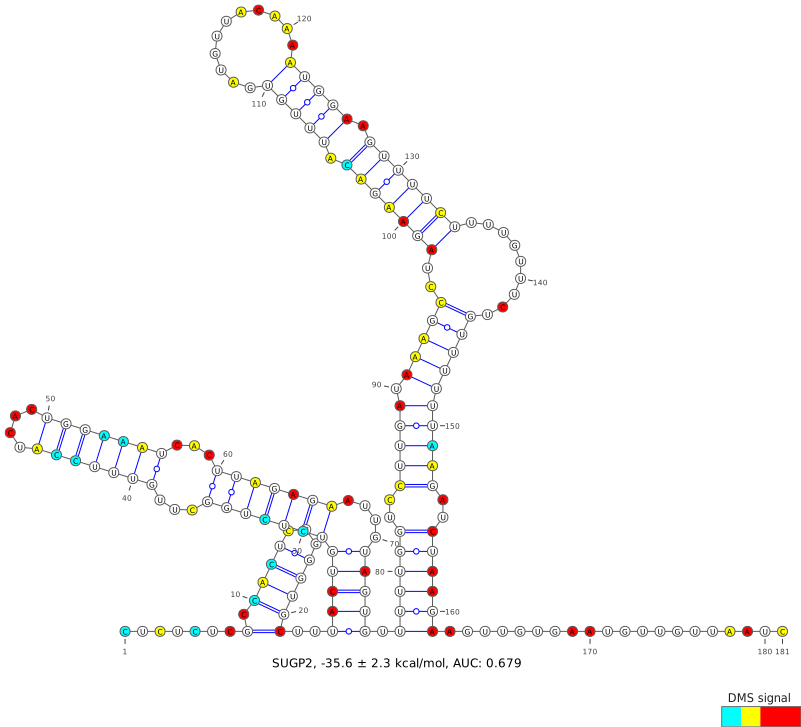
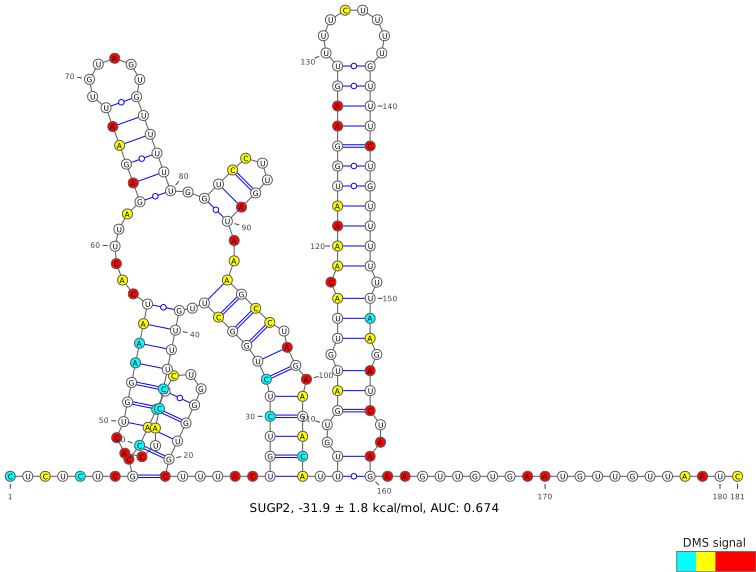
3'UTR 3426-3606 18990927-18991107 181 0.4630 70 0.32
Download CSV

Custom Gene Windows

No custom gene windows have been created yet.
Gene Window Instructions/Interpretation
  1. Search for a gene by name. For each gene, only the canonical transcript (as defined by UCSC in GRCh38.106) is shown. Some gene names may correspond to multiple genomic locations.
  2. For the selected gene, a scatterplot showing the Gini indices, where a high Gini index corresponds to a highly-structured region, for small windows within the transcript. For small RNAs, these windows are sized 20 valid (coverage- and quality-filtered) A/C data points; for all other transcripts, these windows are sized 50 valid A/C data points, due to the ability of DMS to modify primarily A/C bases. In regions with sufficient coverage, these windows correspond to actual transcript lengths of roughly 40 and 100 nucleotides, respectively.
  3. Select a window of interest, either from the scatter plot or from the table below. Generally, windows with a high Gini will yield better results, where the DMS signal aligns more accurately with the predicted base-pais. Windows with high Gini indices relative to the rest of the transcript can also be used to find functional structural elements (ex: TFRC iron response elements).
  4. If previously-defined windows do not suit your needs, you can define a custom window either using (1) the slider below the scatterplot, which shows both a heatmap of previously-defined windows as well as the locations of each UTR and CDS; or (2) custom coordinate-based entry via Predict by Coordinates.
See About for more information on the dataset and for best practices in structure determination.

completed
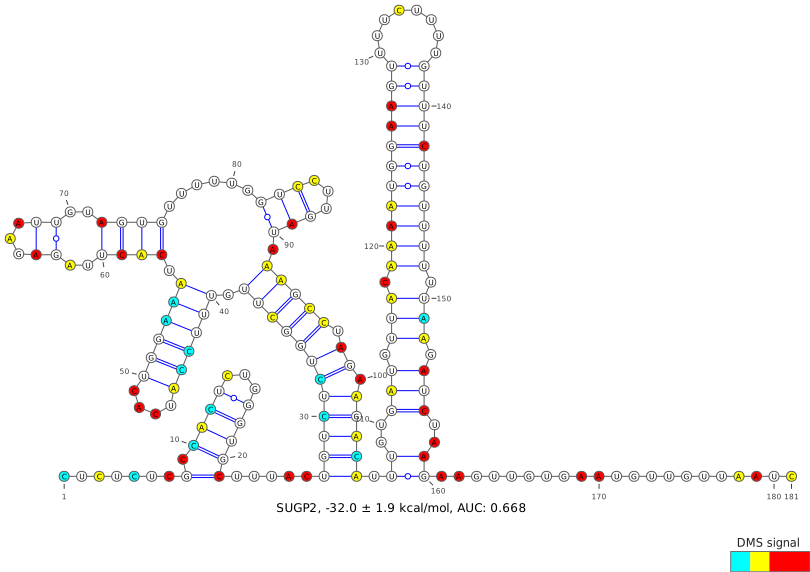
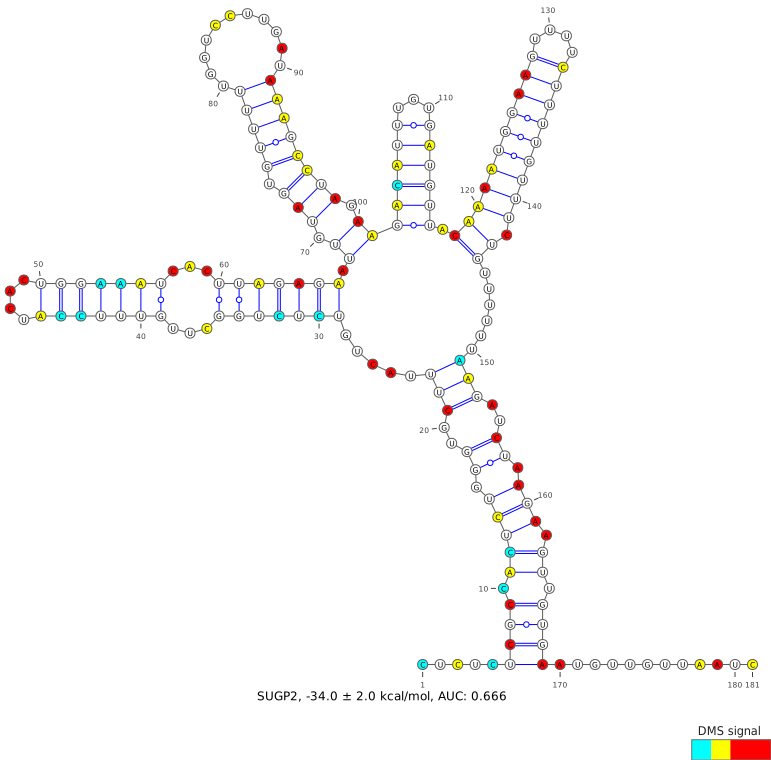
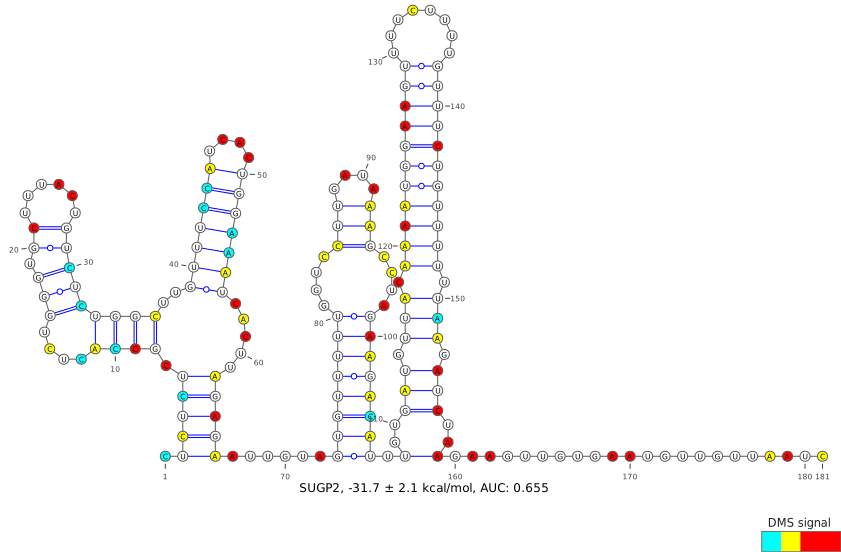
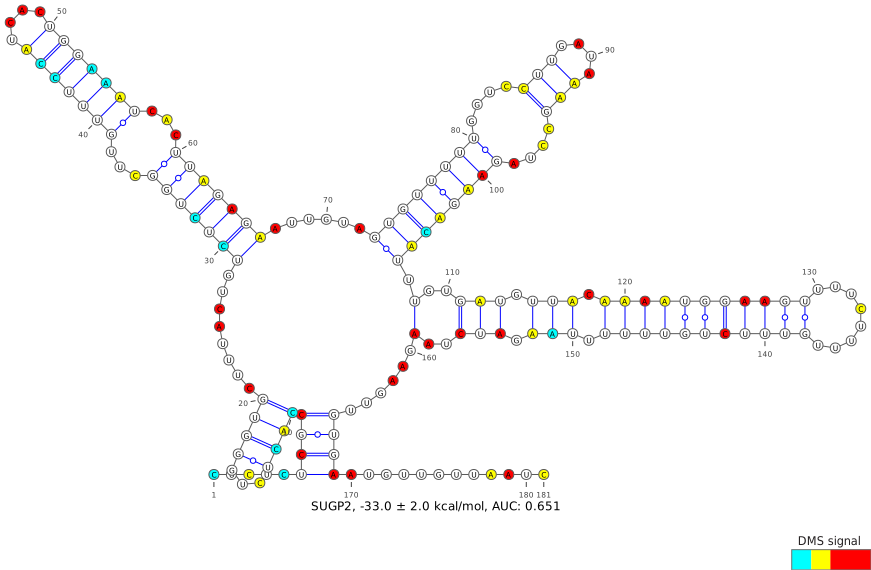
35
SUGP2

Aoi: Chr: Coords Strand:
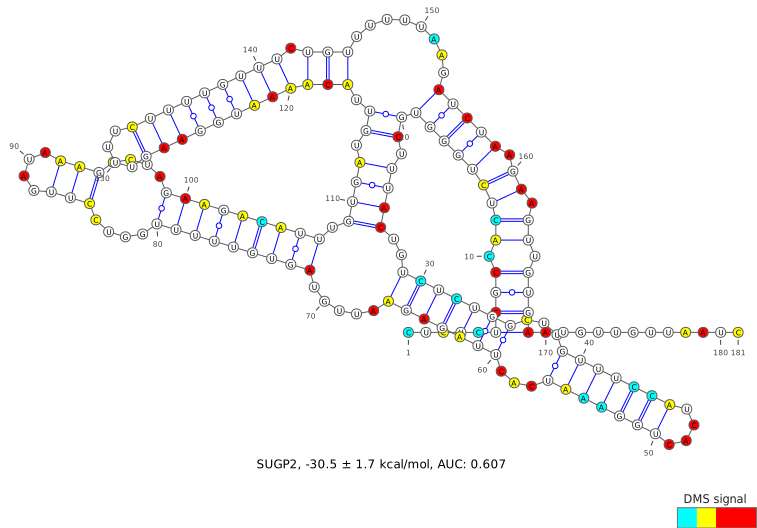
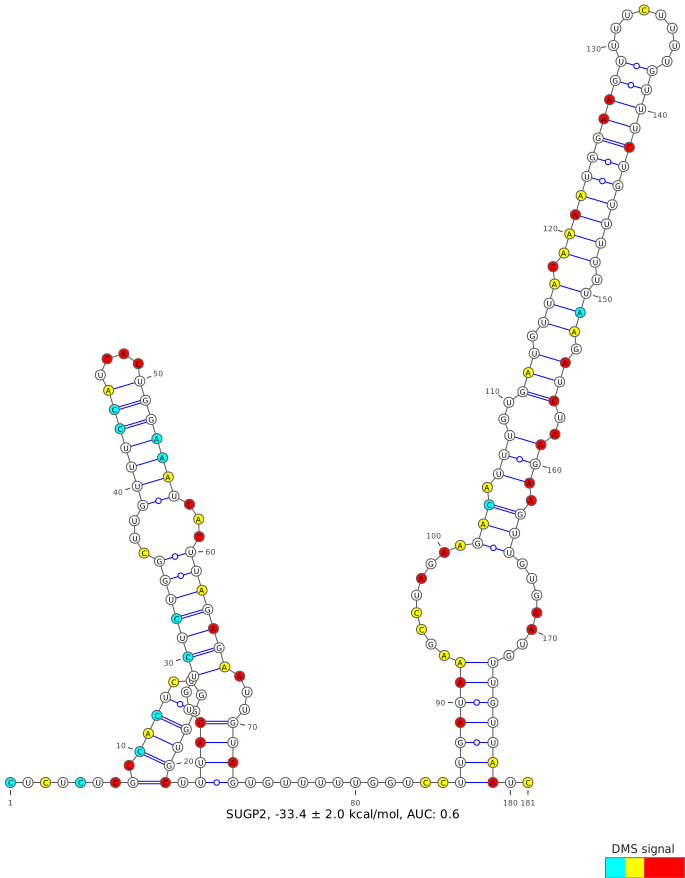
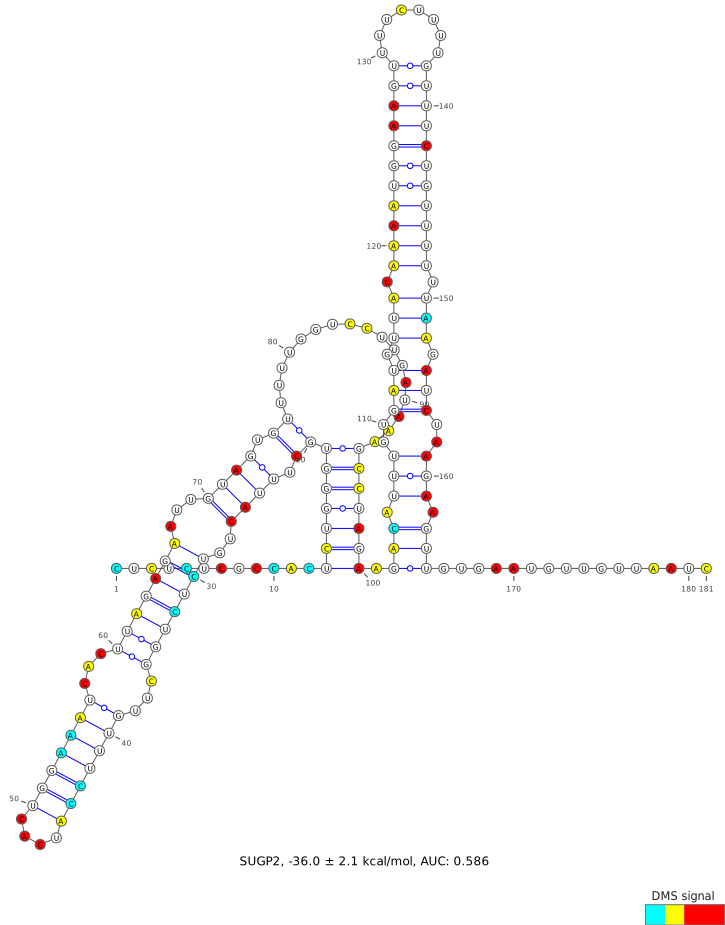
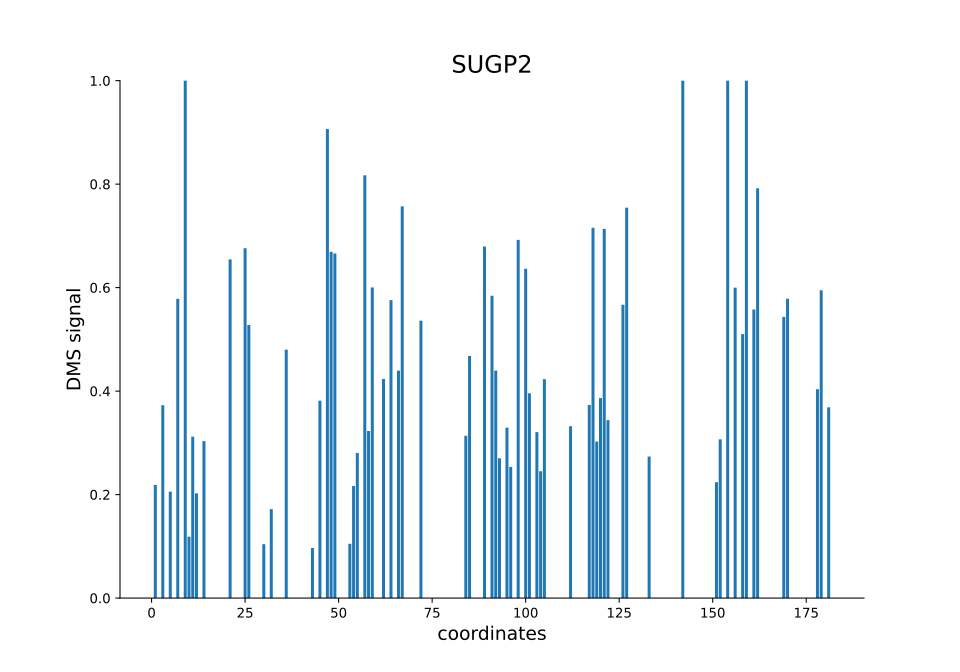
SUGP2 19 18990927 - 18991107 -


  • Annotation Based on canonical annotations, the following gene is in your area of interest: SUGP2(-)
  • Length Length of region: 181 nt.
  • Coverage 100.0% of the region's A/C bases included in the filtered DMS dataset. Ideally, this number should be as high as possible for an experimenally-accurate prediction, and over 70% is recommended.
  • Structures This region has 9 maximum predicted structures. 5 is the maximum structures visible on this site. For up to 20 predictions per region, download and run the code locally.
production / 05e29e215d / 2026-04-03 23:00